
Dear friend,
I’m blessed enough to know incredible women; property managers, business owners, tour leaders, chefs, teachers, coaches, writers, podcasters, and mothers. These women are uniquely gifted and highly capable. I love watching them work.
And yet, despite all of our accolades and accomplishments, so many of us find ourselves feeling “behind”.
Behind on laundry.
Behind on food preparation.
Behind on inboxes.
Behind on this life that, surely, we should have figured out by now? (I’ve cried thrice today.)
Despite having grocery deliveries, smart watches, detailed planners, and spreadsheets, we’re often still struggling to keep our heads above water.
Simultaneously, we live with a hunger for experience and pleasure; we desire to watch the sunset, to eat pasta, to go dancing, to feast and host, to read for fun, to take slow walks in the countryside, to paint our toenails red, to create culture, and to be a part of something beautiful. To be without having to produce.
Therein lies the paradox: wanting to add more life to our plate while staring down a refrigerator that needs organizing and pants that still need stain remover.
So which is it?
Do we double-down and perform?
Or do we admit that our lives have grown too large for our limits?
I no longer believe the solution is better systems; rather, I believe it is smaller expectations of life, of culture, and of ourselves.
(I think my husband, ever the advocate for Tolkien’s worldview, would be proud of this statement.)
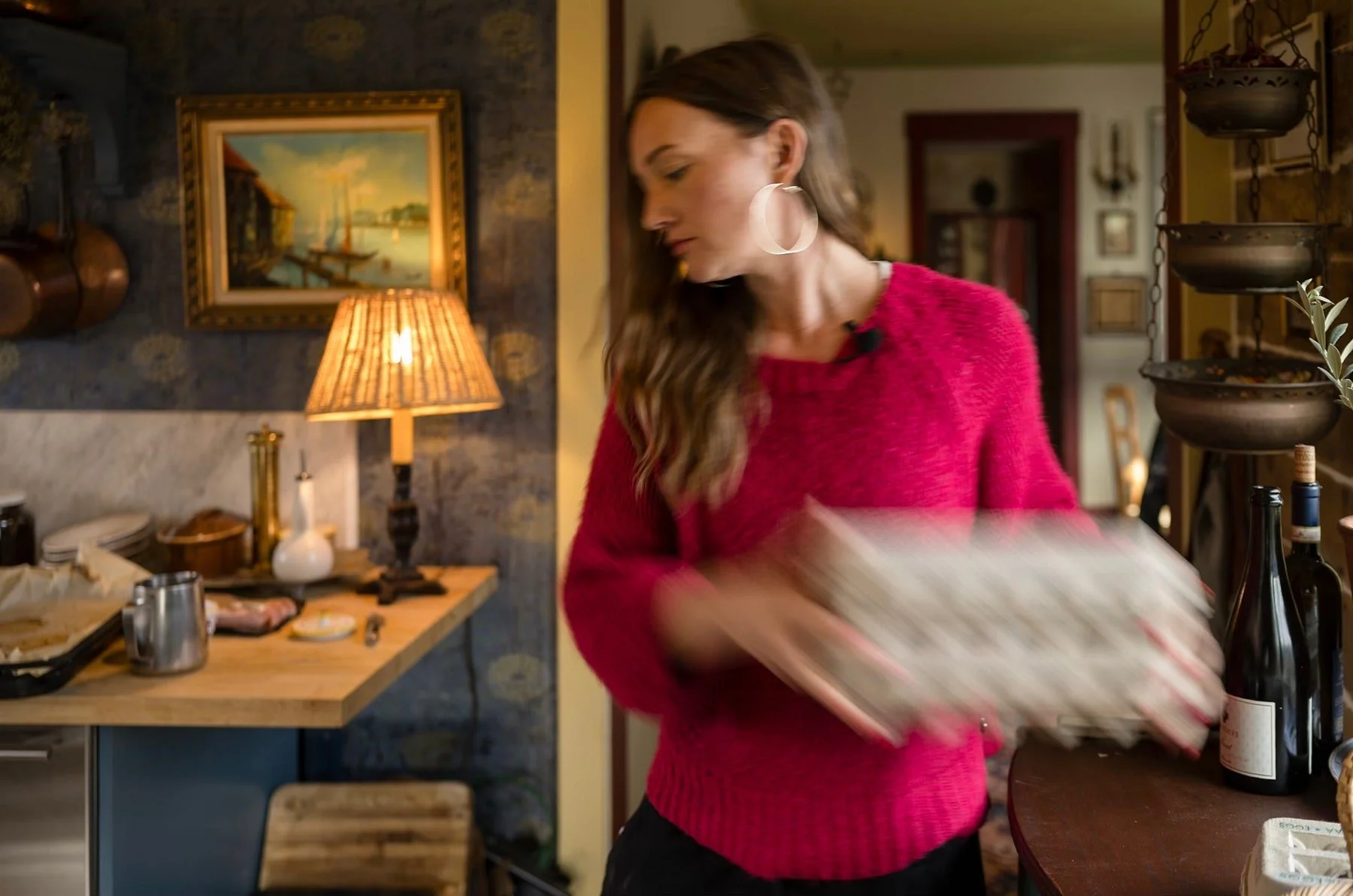
Lest it feels pretend, we are not imagining the pressure. It’s intense out there, folks. There are times when my chest feels impossibly heavy, I am so far under what “has” to be done that I almost can’t breathe. I am a Mom — and that alone is hard. I am just one person living in the middle of an unordinary life; trying to make sure my kids have socks and can spell.
My days are filled with writing you these letters and mixing up batches of pancakes; there is simply not capacity to think beyond growing teenagers and grocery shopping.
I am no longer convinced our so-called conveniences are helping us. Owning a car means long distance can be traveled, cell phones mean accessibility is constant, world connectivity means disaster is at the forefront, p*rn is in the pockets of our children, there are endless opportunities for outrage, and we are but consumers to be sold what the ad-gods tell us we need.
Frustratingly, we are but products of our modern culture and the expectations and realities of it. The income needed to live as a family in our local area, for example, has risen drastically over the past twenty years. In most instances, two incomes are absolutely required to make ends meet. With such a demand of time and effort, it’s no surprise that we find ourselves strapped to suffocating schedules, social pressures, and time saving services.
Not only has the cost of living pushed more family members into working, but with the policy and curriculum changes in the public school sector, even more families find themselves in a position of being the primary educators for their children. This is a massive, long-term, and formidable undertaking, to be sure.
The lie is that with the right routine or the right optimization, we will somehow be able to finally manage it all well.
I don’t know about you, but I sure can’t.
The only solution is to opt out: choosing to set smaller expectations of the world, of my family, and of myself.
This means that on days like today, when I’ve found my eyes welled with tears, there is a little more space to feel human emotions. To sit with them over a cup of tea, to talk about them with a friend, to pray through them, and to recognize that feelings are good to have, even if they hurt sometimes.
This also means that I need to disconnect — to be without data on how many steps I’ve taken, what my heart rate is, how many hours of sleep I got last night, or any other metric that a) requires me to charge another device or b) gives me something to be anxious about.
If I had to point my finger at the real culprit behind the curtain, I would point it at short-form video content; these videos overload our emotions faster than we can possibly negate the effects. Whether consuming them gives us feelings of elation, laughter, joy, fear, anger, frustration, or awe, it is still way too much emotion for a human’s finite system to handle. This method of delivery is so highly effective, in a few short minutes, our systems can be filled far beyond our capacity to work through and process such effects.
We. Are. Overloaded.
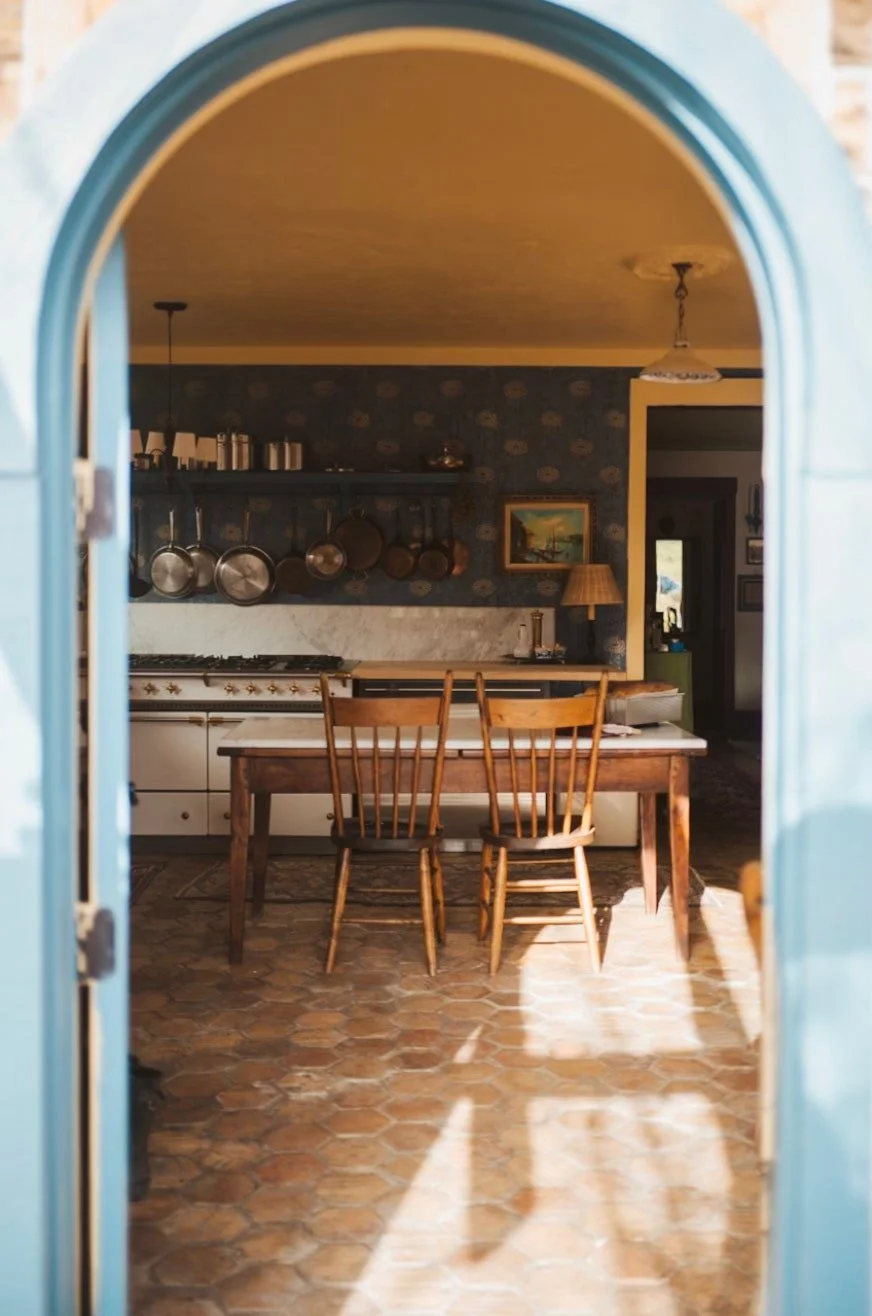
But Shaye, don’t you make your living online?
Yes, dear friend. But I hope you notice the media in which I share my intimate thoughts with you: long, written form. There is reason behind this and also reason behind why you’ll never see us with millions of likes or social shares — the expectations and cost of such production and consumption is a cost we are simply not willing to endure. To put it more plainly, this is not the type of world we want to be a part of building.
We choose long-form writing; words contemplated, written, and shared amongst the crowds.
We curate slow-community and skill development in The Cooking Community.
We break bread and go on adventures with our guests in Italy.
This is the version of the future we want to invest in.
As I think forward towards a future, it simply has to be more of these real and true happenings. I see a future of well-educated, considerate, and compassionate children, of deep and honest human relationships, of intentionally slower paced days involved with nature, of stories and tales (not reels) being the topic of conversation at the dinner table, of less obligation and more privacy.
There is a line in the sand: those who accept the norms of how it is and those who cannot bear such a burden.
And lest this sounds like my smaller expectations are lower standards; quite the opposite is true. I hold my life, my family, and my work to the highest standards. To do so is to recognize the disease that has infiltrated our culture and subsequently, our homes. These standards can easily recognize that for all its promises, modern culture has left us with little more than severe overwhelm.
To put it clearly: I would rather live a small life well than chase a large life filled with this poverty of soul.
Despite our efforts, some floors will remain dirty and some laundry undone. Not because we are failing — but because we are finite.
My smaller expectations are not resignation. They are freedom.
Love,

Try The Cooking Community free for 14 days
If you love cooking along with me, there’s plenty more where this came from. Join home cooks from around the world for new recipes, instructional videos, kitchen inspiration, and good conversation. Start your free two-week trial here.
