
Dear friend,
When we first brought a dairy cow to our small farm thirteen years ago, raw milk was illegal in our state — we wanted it and we literally couldn’t buy it. Likewise, organic was still just a hippy-dippy word thrown about at health food stores and a locavore diet was for a few of us fringe folk. Fifteen years ago, when I wrote my first cookbook From Scratch, I was introducing much of our audience to local honey, freshly milled flour, sourdough breads, slow-cooked meats, and seasonal produce for the first time.
It’s almost hard to imagine now, in the age of health information and obsession that we live in, but at the time, it felt revolutionary.
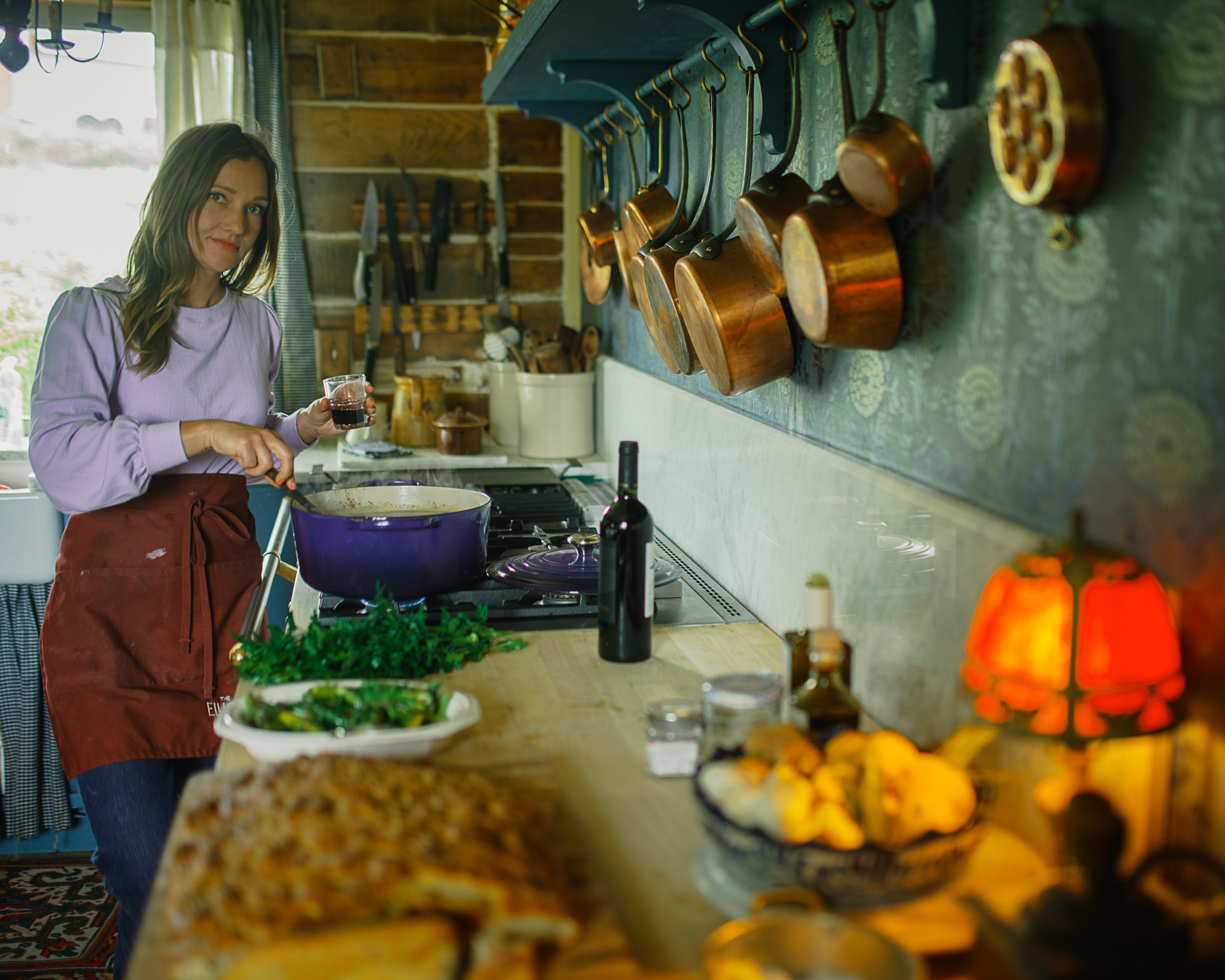
This is why we had to buy a cow, plant our own garden, preserve our own produce, even raise our own meat. In my schooling for Beef Production two decades ago, I remember the words “grass-fed” being mentioned only once in passing as a “teeny trend that won’t last.”
Then and now, in my home kitchen, I look for ethics of production, nutritional value, and pleasing taste in my ingredients. These are my metrics of quality. Holding these standards often means getting creative with sourcing — still, rarely does a week go by that I’m not gathering my ingredients from at least four stores (some local, some shipped).
Years ago, when this metric of quality became my conviction, ingredients were often unavailable. There simply wasn’t enough demand. If there was enough demand, but it was a specialty product, that often meant we couldn’t afford it anyway. And thus began the journey of us relying on the sweat of our brow to grow it, preserve it, cure it, store it, ferment it, milk it, or freeze it ourselves.
This work became my life’s calling: to take the highest-quality ingredients I could source from my land and my community and to turn them into nourishment and pleasure for those at my table.
For some, this is called “homesteading.” For many Italians, this is simply called “eating.”
It is the love of seasonal, local produce and ingredients that serves as a natural bridge between the two.
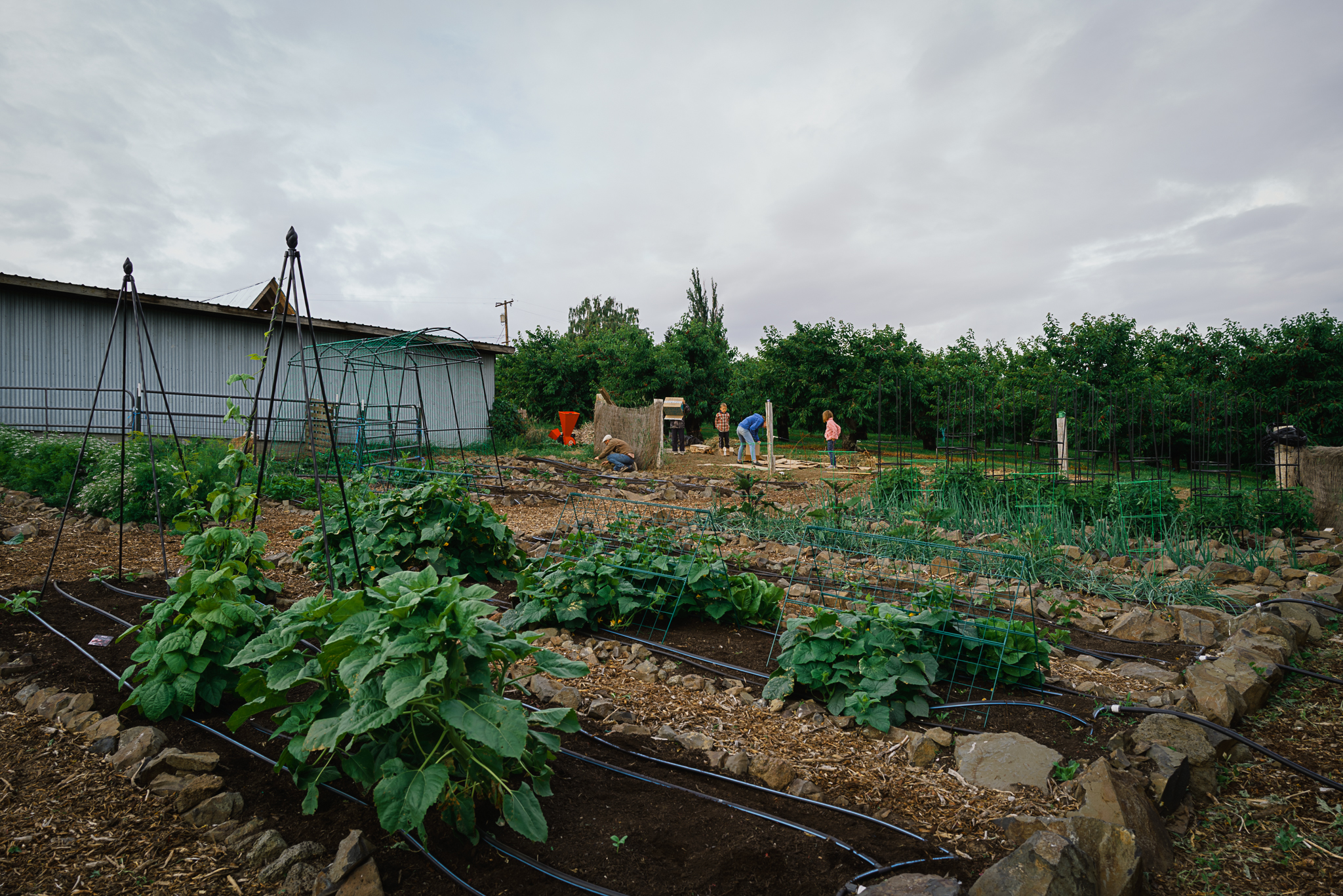
We garden.
There’s rarely a balcony, a doorstep, a plantable patch in Italian villages not filled with potted citrus, tomatoes, or herbs. With the first of the golden morning light, the older women in the village will begin to appear on second- and third-floor balconies with watering cans — daily tending to their “kitchen gardens”. Walking through the winding streets of Chiusi one early morning, I passed an old woman doing just this. After watering her rosemary and basil and harvesting a small basket of tomatoes, she gently rubbed the basil leaves between her fingers and inhaled the aroma. “Che buon profumo!” she exclaimed with joy in my direction. I could smell the basil from across the street. “Si, che bello!” I called back.
Unlike the homesteading community, in which many have access to plots of land in this beautiful, large country we call home, the average Italian has access to very little space for their garden. And yet, what space is available is filled with their favorites: lettuce and greens in the spring, tomatoes, beans, and eggplant in the summer. They are a people who know and respect the seasons, who take advantage of what is available to them and steward over it in the name of growing food. Who does that sound like?
Because space (especially in the villages) is limited, unlike many American homesteaders, many Italians are also very well trained in the art of foraging. In our village, asparagus, chestnuts, truffles, mushrooms, various greens, wild garlic, and fruits are common for villagers to gather from the woods that surround us. While this will look slightly different in each region (especially those that border the beautiful seaside), the idea remains. The land is ours to cultivate, to harvest from, and to enjoy. We garden.
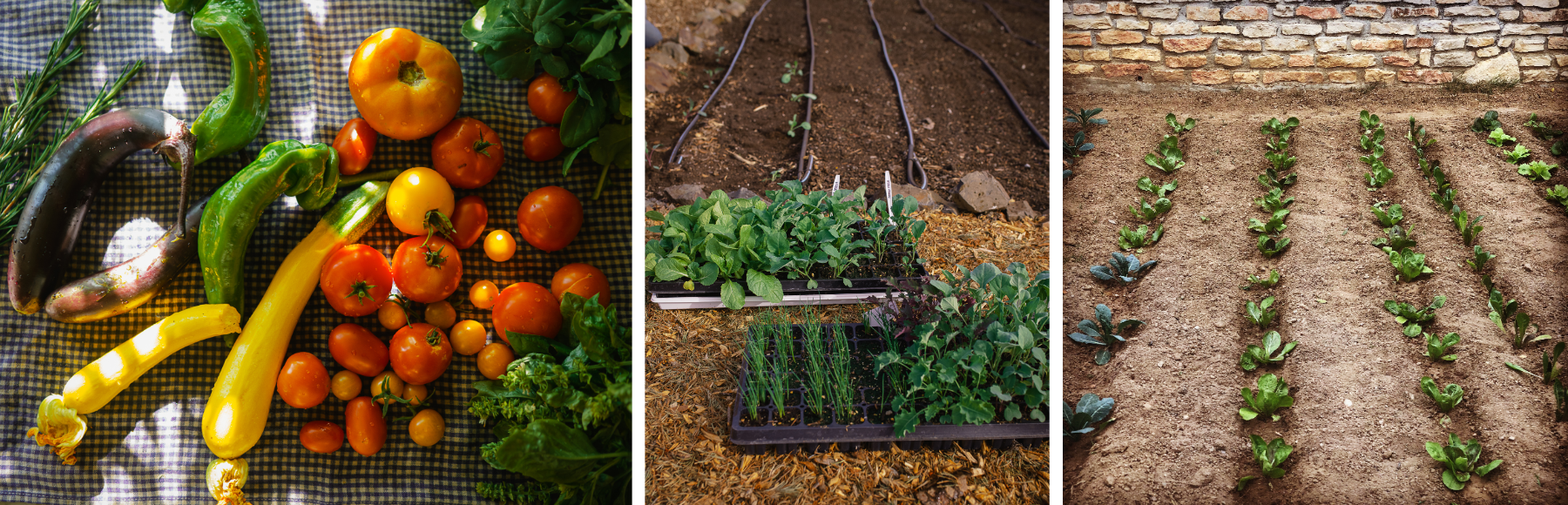
from my garden in Washington to a small roadside garden in Lucca, Tuscany
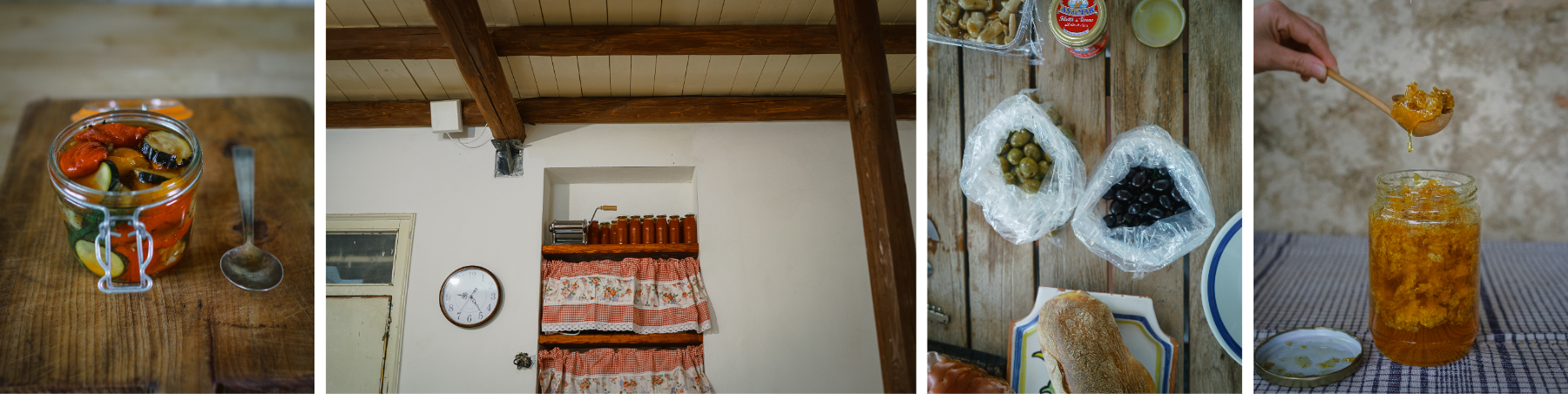
We preserve.
Thanks in large part to our Italian American community in our country, we are well acquainted with the idea of Italian preservation. What comes to mind if not large groups of Italian American families stirring vats of tomato passata, pressing grapes for wine making, and mixing meat and seasoning together for salumi? Just as Italian culture revolves around food, so the harvest revolves around preservation. Even the most perishable of Italian treasures — products like fresh truffles or freshly caught sardines — are preserved (the truffles in olive oil or honey, and the sardines in salt, respectively). Lemons are made into limoncello, oranges into marmalade, eggplant into melanzane sott’olio. Wine and grappa are made from the grapes, an endless array of cured and dried meats from the harvest of a wild boar. Fish is salted, slabs of lard are packed into vats with garlic, salt, and herbs, grain is ground, made into pasta, and dried in the summer sun.
Likewise, the homesteader is one who often finds themselves in the kitchen, curing slabs of pork belly into bacon, whisking up jams and jellies, drying bouquets of herbs for winter soups, and jarring up summer tomatoes and peaches for the colder months ahead. Here on our own farm, we’ve cured duck breasts into duck prosciutto, filled jars with our homegrown honey and comb, pressed our apple harvest into cider, and dried rosehips and peppermint for winter tea. Potatoes, carrots, and apples are carefully stored in bins in cool locations for the winter… heads of homegrown garlic hang in the kitchen… sun-dried tomatoes fill pint jars on the pantry shelves.
We are both people comfortable with such labor: preserving is a laborious, joyful necessity of life after gardening.
We look local.
Long before boutiques and gift shops shouted for us to “buy local”, homesteaders were doing just that. Twenty years ago, we began to find local farmers and ranchers from which we could source our meat. Eggs were sourced from a farmer down the road, vegetables were gathered from booths at the farmers market, and even grain was gathered from the dryland farms near our home. What wasn’t available locally, we grew ourselves — as local as one could possibly get. Though I often look to Italy for culinary and cultural inspiration, I still often look local for the ingredients. In my home of Washington State, that means local walnuts, chestnuts, almonds, apples, cherries, pears, apricots, nectarines, peaches, plums, fish of all sorts, meat of all sorts, eggs, grains, beans, lentils, and endless produce. For these, and many more ingredients, I look to my own farm… to my own community… to my home here.
Italians do the same, though on an even more intense scale. I’ve had conversations with Italians in which they refuse to source produce from the next village over (five miles, give or take), citing quality or preference for their own. One quickly discovers that each region has such a strong personality, such a strong sense of identity and preference, that the idea of eating local takes on a fairly intense rigidity. (I’m still afraid to tell my Umbrian friends that I prefer Sicilian olive oil for fear of excommunication.) Yet with such rigidity comes identity: the menus served at local bistros are reflective of what grows in that area, and almost nothing else, save easy-to-transport hard cheeses (Parmigiano from Emilia-Romagna has found its way up and down the country), dried fish, and cured meats.
The point isn’t rigidity: my local-focused kitchen still happily sources olive oil, rice, and salted anchovies from around the world. But these are accessories to the core of our kitchen which is built on the harvests from our land and the lands around us. For homesteaders and Italians alike, we look local.
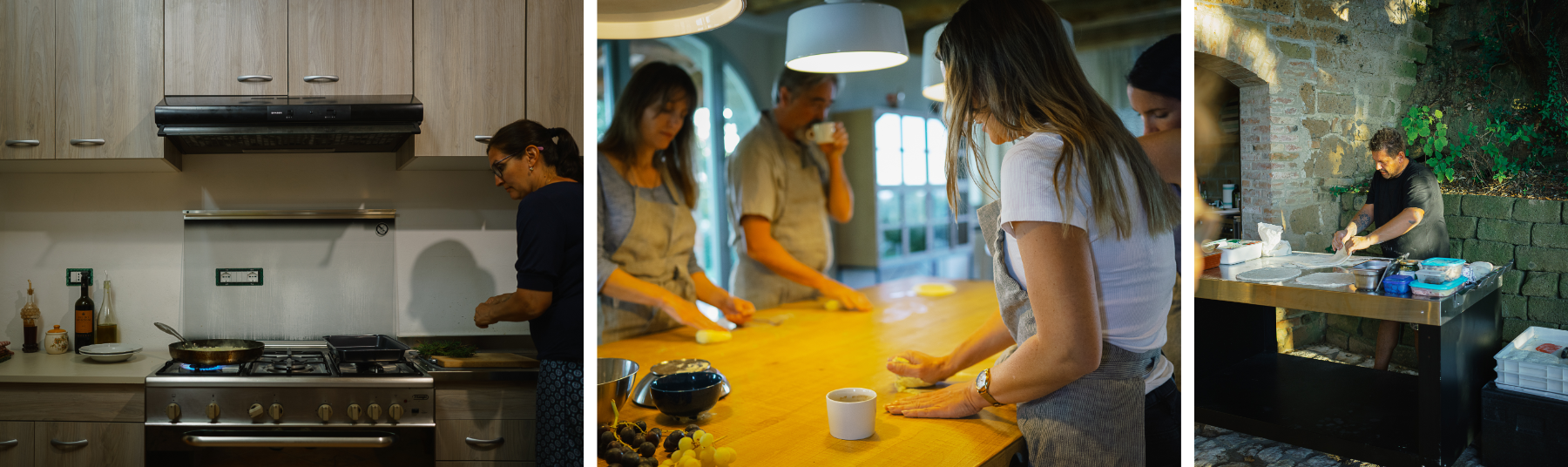
Melissa in her Sicilian kitchen cooking us supper, me teaching a pasta class in Umbria, Ciro making us pizza
We cook.
Whether the gardening begins the journey and, by necessity, the gardener must figure out how to cook the fruits of their land, or whether they became gardeners after falling in love with good ingredients in the kitchen is of no consequence. The simple fact is that if you’re a grower of food, chances are, you’re also a cook. Most likely, you’ll find a homesteader’s table filled with fried, sugared apples in the fall… cold cucumber salads with dill and basil in the summer… slow-cooked pots of broth, meats and grains in the winter. What we cook is often set by the harvest (or lack thereof) at hand.
My Italian tutor pointed me in the direction of a website called, essentially, “My Nonna Didn’t Cook” — a young, Italian woman’s recounting of the cliché of Italian nonne bellied up to the stove, filling platters with delicious foods for their families. The point, obviously: not every Italian cooks. My tutor, for example, lives in the heart of Venice and hardly cooks at all (her last attempt at a dolce resulted in her accidentally using salt instead of sugar in the crostata dough). Setting aside exceptions, we are both a people who generally delight in preparing food — our delight perhaps fueled by the fact that we put much effort into growing and gathering the ingredients… (see above!)
While much of the world seeks after convenience, we are both groups of people who instead long for something far more delicious. As such, we cook!
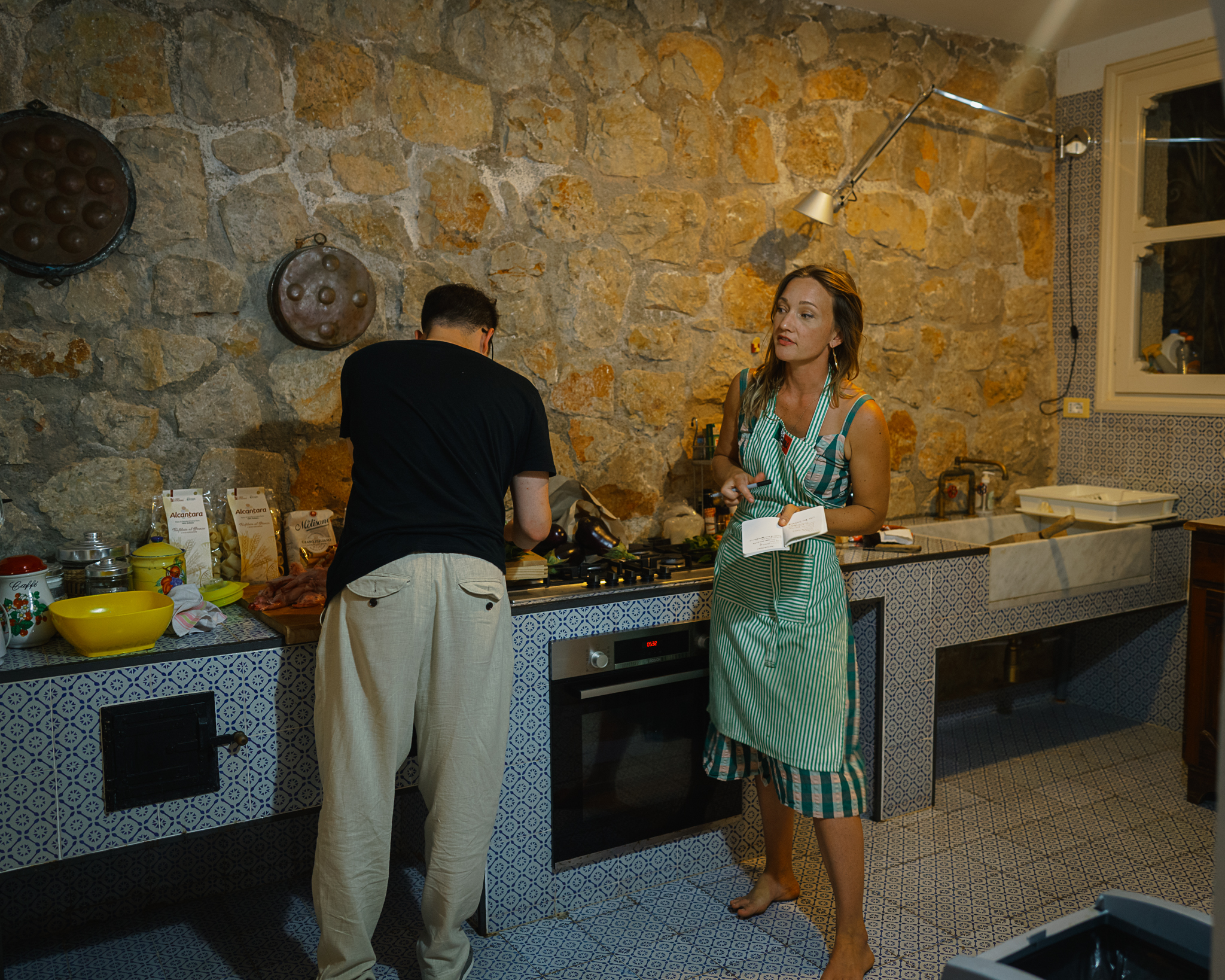
John teaching me a traditional chocolate rabbit recipe, Sicily, 2022
We share.
On our most recent Che Vita Getaway, we had a solo traveler who joined us (who just happens to be a homesteader based out of Kentucky). One early morning, before the group had gathered for the day’s activities, she took a short walk over to the village cafe for a cappuccino. Alone. After ordering, she sat at a small table. An older gentleman came up to her table and asked kindly if he could join her for a morning coffee. “We are both alone,” he explained, “and coffee tastes better when shared with a beautiful lady.” Lauren laughed and they enjoyed their morning cappuccini together at the small table, the village bustling around them. Though they didn’t see each other again during our trip, she smiled each time the story was retold. Because homesteaders and Italians alike recognize the value of sharing with one another — whether that be time, harvest, or table.
In our two decades of homesteading and traveling to Italy, there have been more examples of sharing than I could ever record for you here.
Helping hands at animal harvests.
Bottles of shared olive oil.
Bins of ripe pears.
Slabs of pork.
Homemade wine.
Jars of honey and loaves of sourdough.
We are a sharing people and I often find myself (in both communities) with something in my hands or on the table that was a gift — the sharing of a food, a harvest, a homemade treat. Perhaps this goes back to the value placed on the ingredients in the first place, a recognition of the harvest and the joy of it after a season of effort. Perhaps it goes back to the fact that because we look local, we have eyes to see those in our vicinity with whom we could share in the first place. Regardless, it’s easy to find yourself on the receiving end of generosity from both groups of people. The correct response is to smile, savor the gift, and offer up your own when the time is right.
Life, and food, are far greater when they are shared.
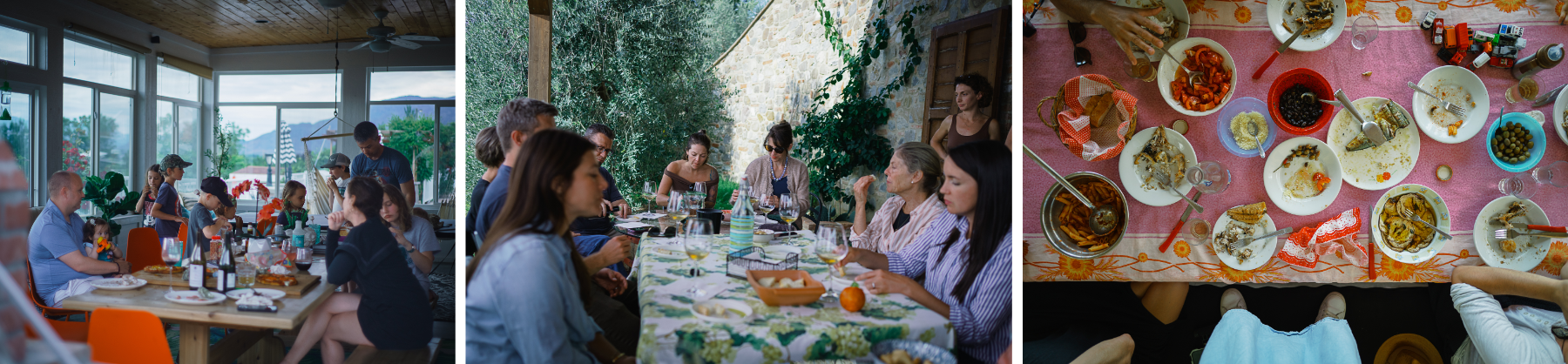
Shared tables from Washington to Italy
While some may see Shaye’s Italian Kitchen as a grand departure from who we were before, I experience it as a homecoming — a unification of my two favorite types of people. Both are resourceful, hardworking folk who always look forward to the next meal, what it says about the world around them, and how they’ve participated intentionally with it.
Our food has a story. These folks choose to be a part of it.
(Disclaimer: as one must always do in such conversations, I am painting with broad strokes. Many homesteaders grow and gather food for preparedness or other motives beyond food quality. Likewise, I’m sure many Italians eat convenience foods and give very little thought to food quality… though, to be fair, I’ve never met them.)
Love,
Shaye
