
Dear friend,
I’m writing you this letter tucked into bed, a half-empty cup of coffee by my side. I didn’t want to stay in bed this late into the morning, but a small cold has kept me bed-bound for the time being. Stuart, kindly, brought me a piece of buttered toast in bed and I finally mustarded up enough strength to prop myself up against the warm pillow and write to you.
We’ve had a surprisingly relaxing break, despite the wonderful holiday parties, church services, and gatherings we’ve been able to attend and host. I have spent many hours curled up on the couch continuing my journey through Dante’s Inferno (not exactly traditional holiday reading, but here we are).
We’ve binged National Geographic shows, eaten popcorn and cold chicken for dinner, stayed in our pajamas, and taken the pressure off ourselves to fill the time with productivity.
(Easier said than done for some of us.)
I don’t want to go back to life-as-normal in the new year. Lest this sound like a complaint, it’s not. Rather, I remain always curious and observant about what’s working for our family, and what’s not. Just like any normal business continually assesses its resources and how they’re used, so it goes for me as the “home manager”. Each break and reset is an opportunity to prune our vines (and every gardener knows how vital that is to, well, vitality.)
But how do we enter back into our normal days well?
Here’s what I’ll be doing:

1. Pick something to say no to.
There’s always something lingering at the bottom of the barrel — a piece of the normal routine that uses resources that aren’t matched in returned value. As I sit down with my new 2026 planner in hand (oh! the joy of a fresh planner! never mind that I accidentally bought an academic one that actually runs from summer to summer…) and I begin to scribble in next week’s normal schedule, it’s naturally a time to reflect on what I can take off the schedule.
Not because it’s not good or because I don’t find value in it, but because I simply can’t do it all.
Taking an obligation off the list is nothing more than a pruning for a season. Not forever. For a season. In reality, saying no to something is a great kindness to ourselves and our ordinary days.
2. Pick something to say yes to.
After eliminating that which no longer serves us best in this season, it’s wonderful to put that capacity towards something good that will serve us.
I can think of lots of places for extra energy to go in my own schedule: from writing a new cookbook, to doubling-down on my Italian lessons, to getting my new vegetable beds in order.
There’s so much I want to lift to a seat of priority, but the trick (I think?) is to keep it simple. A singular yes is far better than ten that are half-hearted.
3. Cast a vision.
Whether it’s for work, for home, or for personal development, I love the exercise of creating a visual collection. If it sounds silly, it is a bit — but I think that’s alright (“fun” isn’t a curse word, after all).
I delight in casting a vision for where I want to go, pinning it up somewhere I can see it easily, where I can then hold it like a compass against decisions and daily-life.
How the heck can we get where we’re trying to go if we don’t know where that is?
I cast multiple versions per year, for multiple parts of life: for home, for kids, for the garden, and for work. It’s easy, it’s free, and it gives me a metric by which to make ordinary decisions that, over-time, greatly impact the trajectory of where we land.
(Side-note: this isn’t about strong-arming our way into a perfect life, but rather, naming what is good and healthy for our homes and souls.)
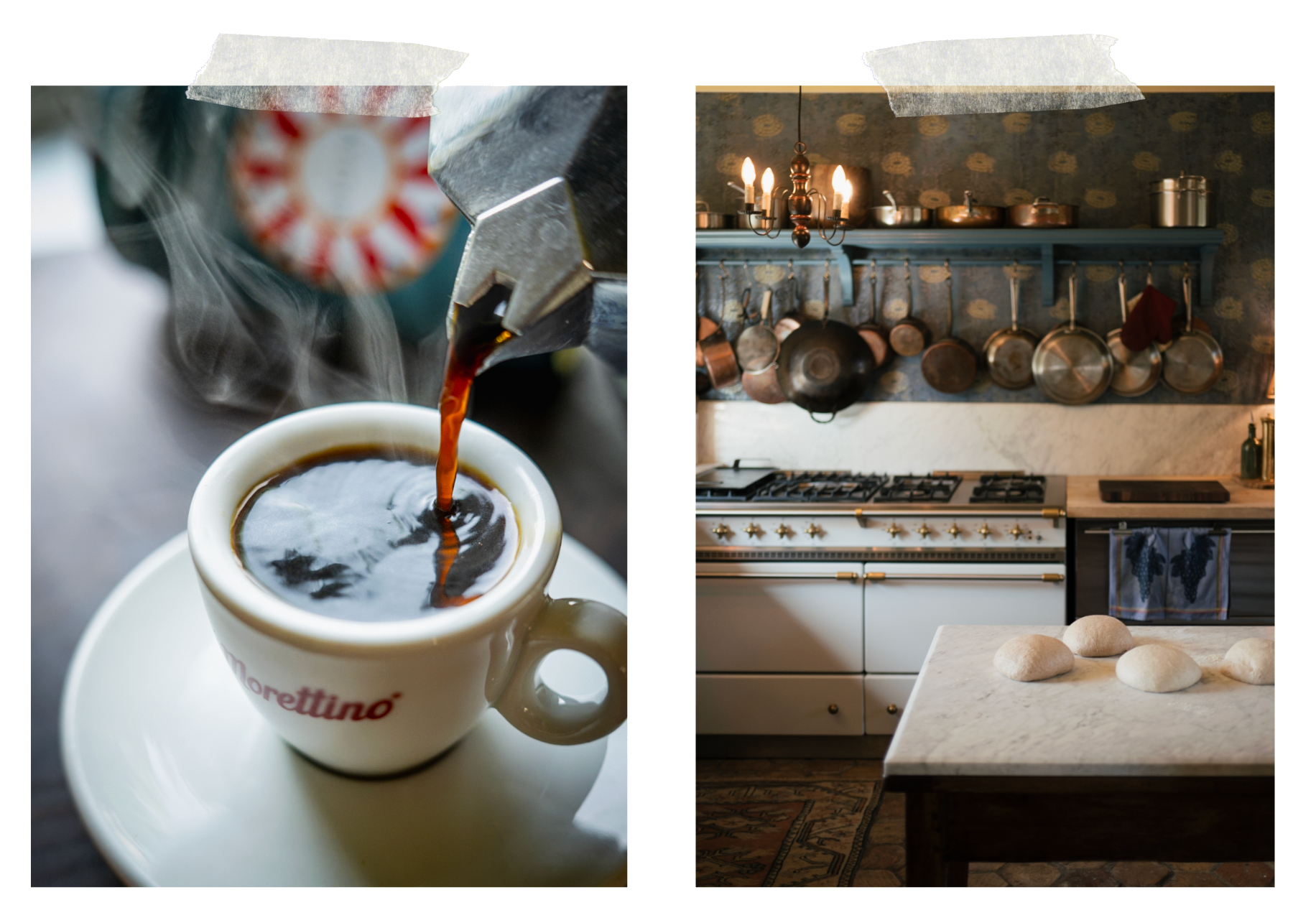
4. Geek-out on the tasks at hand.
If this means repurposing a bulletin board, buying a new journal, scheduling dentist appointments every six months (that’s what responsible people do, right?), laminating new chore schedules, or writing up a new menu and shopping list, let’s do it! Let’s go alllll in.
I put my laundry sheets into a beautiful, lidded glass container — the powdered cleaner goes into another, and the dusting pads in yet another. I splurged on a steam-iron years ago that cost more than any of my shoes (not saying much, but still, it’s a great iron). I transfer my dish soap to a vintage pitcher, fertilize my house plants with fish emulsion, and polish my copper monthly.
I go full-geek on tidiness of thought. I currently have six journals at hand: one for prayer requests, one for commonplace entries, one for house tasks/details/projects, one for Italian, one for church, and one for the garden. (I find handwriting thoughts a beautiful way to track and savor ordinary days.)
The youngins may think such tasks are a bit geeky, but they’ve obviously never experienced the thrill of a starched hand-towel or thriving ferns. So who’s the real winner here.
5. Make ordinary beautiful.
This one isn’t complicated — in heading back into a normal schedule, stripped of the glitter and polish of the holidays, we must find new ways to make life beautiful. Though I’ll miss wandering into the living room to find the Christmas tree loaded with ornaments twinkling amongst the strands of lights, I also know there’s still beauty ahead.
It just looks a bit different this time of year.
In our cottage, ordinary beauty in January and February looks like a silk bathrobe wrapped over flannel pajamas. It looks like stacked firewood, beeswax candles, stacks of books, and steamy bubble baths.
It may sound trite, but ordinary beauty makes ordinary living blessed.
I’m sure I’ll write to you in late-February lamenting the weather, feeling quite sick and tired of ordinary winter days. When I do, please feel free to give me a verbal reprimand and remind me that every season of life is worth delighting in.
Onward!
Love,
Shaye
